(To see "Part I: God" click here.)
The People Were Living in Darkness
All throughout the Old Testament, the Israelites continually fell away from God and had to be brought back to Him. God had told them exactly what He wanted them to do, but they always ended up not doing it. They were constantly having to offer sacrifices for their sins, and no matter how authentic was their repentance, they would always fall again. The fact was that they were clouded in darkness. Isaiah 59 describes their situation, starting in verses 9 and 10, “So justice is far from us, and righteousness does not reach us. We look for light, but all is darkness; for brightness, but we walk in deep shadows. Like the blind we grope along the wall, feeling our way like people without eyes. At midday we stumble as if it were twilight; among the strong, we are like the dead.” Proverbs 4:19 puts it more simply: “But the way of the wicked is like deep darkness; they do not know what makes them stumble.”
Reading this, we may ask, if God is light, displaying his majesty and giving comfort, guidance, truth, and life, then why would anyone be in darkness? One reason is that people may purposely hide from the light in order to indulge in sinful behavior. Job 24:13-17 talks about people who act like this:
“There are those who rebel against the light, who do not know its ways or stay in its paths. When daylight is gone, the murderer rises up, kills the poor and needy, and in the night steals forth like a thief. The eye of the adulterer watches for dusk; he thinks, ‘No eye will see me,’ and he keeps his face concealed. In the dark, thieves break into houses, but by day they shut themselves in; they want nothing to do with the light. For all of them, midnight is their morning; they make friends with the terrors of darkness…”
When we do things that we know are wrong, we try to hide from God like Adam and Eve did after eating the fruit (see Genesis 3:8). However, by behaving this way, we show how blind to the truth we really are. If we were thinking clearly, we would know that God’s light exposes all of our deeds anyway. Psalm 90:8 states, “You have set our iniquities before you, our secret sins in the light of your presence.” Likewise, Daniel 2:22 says, “He reveals deep and hidden things; he knows what lies in darkness, and light dwells with him.”
Another reason that the Israelites were in darkness despite the existence of God’s light was that God resided apart from man. There was a lot of separation between God and His people. He revealed himself through certain, special people, but individual, regular Israelites did not have full access to Him. For example, only the high priest could enter into the Most Holy Place once a year to offer the yearly sacrifice for all of the people (see Leviticus chapter 16). Also, Moses came into the presence of God on Mount Sinai to receive His commandments, but anyone else who got too close was to be killed, even the animals (see Exodus 19:12-13).
Because of this separation, the people did not always see God’s light. They knew it was there, as we can tell from the many Old Testament scriptures that mention it. They would even sometimes try to follow God’s law, which was supposed to bring them light. However, just as the light of God’s presence faded from Moses’ face after he came down off of the mountain (see Exodus 34: 29-35), the people were incapable of remaining in the light of God’s law forever. The law would have brought life, but the people were already destined for death because of Adam and Eve’s sin (see Genesis 2:17 and 3:6). Their situation was completely desperate. Therefore, it became necessary for God to bring His light of life directly to His people and to tear down everything that had separated them. God spoke to His people through the prophet Isaiah (in Isaiah 9:1-7) to tell them what He was going to do:
“Nevertheless, there will be no more gloom for those who were in distress. In the past he humbled the land of Zebulun and the land of Naphtali, but in the future he will honor Galilee of the nations, by the Way of the Sea, beyond the Jordan—The people walking in darkness have seen a great light; on those living in the land of deep darkness a light has dawned. You have enlarged the nation and increased their joy; they rejoice before you as people rejoice at the harvest, as warriors rejoice when dividing the plunder. For as in the day of Midian’s defeat, you have shattered the yoke that burdens them, the bar across their shoulders, the rod of their oppressor. Every warrior’s boot used in battle and every garment rolled in blood will be destined for burning, will be fuel for the fire. For to us a child is born, to us a son is given, and the government will be on his shoulders. And he will be called Wonderful Counselor, Mighty God, Everlasting Father, Prince of Peace. Of the greatness of his government and peace there will be no end. He will reign on David’s throne and over his kingdom, establishing and upholding it with justice and righteousness from that time on and forever. The zeal of the LORD Almighty will accomplish this.”
Later in the same book, Isaiah speaks for God in chapter 42, verses 6 and 7 to tell us that he is going to rescue not only the Israelites but the Gentiles as well, “I, the LORD, have called you in righteousness; I will take hold of your hand. I will keep you and will make you to be a covenant for the people and a light for the Gentiles, to open eyes that are blind, to free captives from prison and to release from the dungeon those who sit in darkness.”
We know that the One God is speaking of here is his only Son, Jesus.
Jesus Brought God’s Light to the People
The gospel of John speaks much about Jesus as a light coming into the darkness. In chapter 1, verses 4-18, John says of him:
“In him was life, and that life was the light of all mankind. The light shines in the darkness, and the darkness has not overcome it.
“There was a man sent from God whose name was John. He came as a witness to testify concerning that light, so that through him all might believe. He himself was not the light; he came only as a witness to the light.
“The true light that gives light to everyone was coming into the world. He was in the world, and though the world was made through him, the world did not recognize him. He came to that which was his own, but his own did not receive him. Yet to all who did receive him, to those who believed in his name, he gave the right to become children of God—children born not of natural descent, nor of human decision or a husband’s will, but born of God.
“The Word became flesh and made his dwelling among us. We have seen his glory, the glory of the one and only Son, who came from the Father, full of grace and truth.
“(John testified concerning him. He cried out, saying, “This is the one I spoke about when I said, ‘He who comes after me has surpassed me because he was before me.’”) Out of his fullness we have all received grace in place of grace already given. For the law was given through Moses; grace and truth came through Jesus Christ. No one has ever seen God, but the one and only Son, who is himself God and is in closest relationship with the Father, has made him known.”
Later in the same book, in chapter 8 verse 12, Jesus says of himself, “I am the light of the world. Whoever follows me will never walk in darkness, but will have the light of life,” and he says the same in chapter 9 verse 5, “While I am in the world, I am the light of the world.”
We understand that the law was unsuccessful in giving the true light of life to the people, so God had to send His own Son to fulfill this purpose. But, what does this really mean in our lives? We know from verses like John 3:16 that we can have eternal life because of Jesus’ sacrifice on the cross, but what does that have to do with the light? The rest of the passage, through verse 21, gives us some insight:
“For God so loved the world that he gave his one and only Son, that whoever believes in him shall not perish but have eternal life. For God did not send his Son into the world to condemn the world, but to save the world through him. Whoever believes in him is not condemned, but whoever does not believe stands condemned already because they have not believed in the name of God’s one and only Son. This is the verdict: Light has come into the world, but people loved darkness instead of light because their deeds were evil. Everyone who does evil hates the light, and will not come into the light for fear that their deeds will be exposed. But whoever lives by the truth comes into the light, so that it may be seen plainly that what they have done has been done in the sight of God.”
In the Old Testament one of the main things that God’s light symbolizes is the truth, and Jesus’ light in the New Testament is no different. It shows man’s actions for what they are, and it helps to guide us in the right way to live. We can take Jesus’ life as an example of what we should do, including his compassion for those in need, his defense of the truth, and his complete sacrifice for those he loved. However, because of that sacrifice, even when we inevitably do wrong we know that God has saved us from the deadly punishment that we deserve. Jesus’ light shows us this truth most of all.
Something important to understand is that all of the things we know about God’s light are true of Jesus’ light as well. Whether we are talking about God the Father or about Jesus His Son, the light still represents majesty, comfort, guidance, truth, and life, and there are probably even other aspects that we have missed. What we need to realize is that Jesus is the perfect reflection of God’s light to the world. In Hebrews 1:3 we read, “The Son is the radiance of God’s glory and the exact representation of his being, sustaining all things by his powerful word.” Jesus reflected God to the people so that they would know him. After declaring himself to be “the way and the truth and the life” in John 14:6, he says to his disciples in verse 7, “If you really knew me, you would know my Father as well. From now on, you do know him and have seen him.” Earlier in John, in chapter 12, verses 44-46, we read, “Then Jesus cried out, “Whoever believes in me does not believe in me only, but in the one who sent me. The one who looks at me is seeing the one who sent me. I have come into the world as a light, so that no one who believes in me should stay in darkness.”
If we know Jesus, we should know the Father, but who exactly does Jesus show the Father to be? In 1 John chapter 4, in both verses 8 and 16, we read that “God is love.” Verses 9 and 10 say, “This is how God showed his love among us. He sent his one and only Son into the world that we might live through him. This is love: not that we loved God, but that he loved us and sent his Son as an atoning sacrifice for our sins.”
Jesus had to come into the physical world as a human being and to die a human death in order to show God’s love for us. He did this so that we could have eternal life in heaven. However, he also did it to show us how to love others here on earth. Continuing in verses 11 and 12, we read, “Dear friends, since God so loved us, we also ought to love one another. No one has ever seen God; but if we love one another, God lives in us and his love is made complete in us.” In fact, Jesus’ light is all about love. John says earlier in 1 John 2:10-11, “Whoever loves his brother lives in the light, and there is nothing in him to make him stumble. But whoever hates his brother is in the darkness and walks around in the darkness; he does not know where he is going, because the darkness has blinded him.”
When Jesus was here on the earth, he was the perfect example of love. All throughout the gospels we read about the many miracles of healing he performed as he took compassion on the people he encountered. He showed his disciples how to love each other through service when he washed their feet in John chapter 13. Of course, his death on the cross shows us how to love through total sacrifice. In all of these things, Jesus perfectly reflected the light of God’s love to the people. However, Jesus couldn’t stay on earth forever. John 12:35-36 says:
“Then Jesus told them, ‘You are going to have the light just a little while longer. Walk while you have the light, before darkness overtakes you. Whoever walks in the dark does not know where they are going. Believe in the light while you have the light, so that you may become children of light.’ When he had finished speaking, Jesus left and hid himself from them.”
After Jesus died, rose again, and then ascended to heaven, he was no longer physically here on this earth. However, the light he brought was still here. It continued to shine in the people who believed in him and who lived lives of love, and that light is still shining today.
Continue to "Part III: MAN" to read about how Christians are the light of the world.
-Becky
Monday, March 5, 2012


Tuesday, February 21, 2012
The Story of the Light - Part I: GOD
I mentioned before that I have been working on a lesson to give to the ladies here. I picked the topic of light to go along with our Bottle Lights side-project. The lesson is turning out to be so long that I need to divide it into 3 parts. This one, Part I, I just gave in the ladies class at church here on Saturday (in Spanish, while reading off of the paper):
I want to discuss a concept that is very important in the Bible. The word for it appears in the Bible more than 200 times, spread throughout both the Old and New Testaments. It is applied to both God and to man. We will have it forever in heaven, but it has been around since the beginning.
I am talking about LIGHT.
In many cases, the idea of light serves as a metaphor for a bigger, spiritual idea. I believe that understanding this idea can help us to have a better understanding of our spiritual lives, how God operates and how we are to respond to Him and to others. The concept of light is a very old one, emerging at the very start of the Bible and continuing to the end. What follows here is its story.
God Created the Light
According to Genesis chapter 1, God created light on the very first day. This has always been very interesting to me because the sun, moon, and stars weren’t created until the fourth day, which makes me wonder about the source of that light. Based on what I see in the Bible later, my opinion is that God Himself was the source of the light, and I believe that He is the source of all light even today. I will explain later why this point is so important, but for right now it is enough to know that the light originated with God.
Something we should notice here is that the light wasn’t alone. Even from the beginning, light has gone together with darkness. Genesis 1:4 tells of the light’s separation from the darkness, and the two have been associated with each other—yet completely distinct—ever since. Verse 5 goes even further to identify light with day and darkness with night, and we know that the day will follow the night until the end of time.
When God did create the sun, moon, and stars to govern the day and the night (see verses 14-19), he put into effect laws of nature that we observe today. Everything in the physical universe has to follow these laws. However, God is in total control of these laws and can do with them whatever He pleases. This is also true of the laws about light.
God Controls the Light
God controls the light and the darkness. Various times in the Bible He shows His power through His control of these things. One of the ten plagues in Egypt was the plague of darkness, which is described in Exodus chapter 10, beginning in verse 21. Not only did God bring darkness on the Egyptians, but, according to verse 23, he did it while continuing to give light to the Israelites. Once the Israelites had escaped from Egypt, God used a pillar of cloud and a pillar of fire to guide them and to hide them from the Egyptians (see Exodus 13:21 and 14:19-20). In these cases and more, God displayed not only His power but also His care for His people.
One of the most impressive displays of God’s control of light and darkness is told of in Isaiah 38:7-8. As a sign that He would keep His promise to King Hezekiah, God actually made the sun go backwards in the sky, causing the shadow on a set of steps to recede instead of continuing to follow its natural pattern. When you consider how the earth rotates around the sun and around itself to give the appearance of the sun rising and falling, doing something to change this system is an incredibly mighty act. The one who has the power to do this also has the power to save us in our distress. He has dominion over the whole world because He is the one who created it. It makes sense that He is able to control the light because it came from Him anyway.
God IS the Light
In fact, God IS light. Skipping ahead to 1 John 1:5, we read that “God is light; in him there is no darkness at all.” So far we have been speaking of light only in physical terms. However, much of the light spoken of in the Bible is either poetic description or refers to something spiritual. Many, many times God is poetically described as being or looking like a light. Of course, since we don’t see God physically on the earth, we understand that the word light here represents something else:
MAJESTY
One of the most evident meanings for light as it applies to God is that of majesty. Psalm 76:4 says, “You are radiant with light, more majestic than mountains rich with game.” We see the same idea in Psalm 104:1-2: “Praise the LORD, my soul. LORD my God, you are very great; you are clothed with splendor and majesty…” The prophet Ezekiel gives us an even clearer picture in verses 26-28 of Ezekiel chapter 1:
“Above the vault over their heads was what looked like a throne of lapis lazuli, and high above on the throne was a figure like that of a man. I saw that from what appeared to be his waist up he looked like glowing metal, as if full of fire, and that from there down he looked like fire; and brilliant light surrounded him. Like the appearance of a rainbow in the clouds on a rainy day, so was the radiance around him.
“This was the appearance of the likeness of the glory of the LORD. When I saw it, I fell facedown, and I heard the voice of one speaking.”
Wow. Paul says in 1 Timothy 6:15-16 that God is “the blessed and only Ruler, the King of kings and Lord of lords, who alone is immortal and who lives in unapproachable light, whom no one has seen or can see.”
Truly God is worthy of all of our praise and is to be feared with all respect.
COMFORT
At the same time that God is worthy of our fear, however, He is the one who gives us comfort.
Psalm 27:1 says, “The LORD is my light and my salvation—whom shall I fear? The LORD is the stronghold of my life—of whom shall I be afraid?” One of the most common fears is the fear of the dark. When it is dark, we can’t see what dangers may be around us, so we tend to feel much better about things when there is light. Really what we fear is the unknown. However, if God knows everything (see Psalm 147:5, Job 28:24, and 1 John 3:20) and if He is the one in whom we put our trust, we don’t have to be afraid of anything else.
GUIDANCE
Even when we are in unknown situations, God’s light serves to guide us where we need to go. In Isaiah 42:16 we see that God does not leave His people in darkness: “I will lead the blind by ways they have not known, along unfamiliar paths I will guide them; I will turn the darkness into light before them and make the rough places smooth. These are the things I will do; I will not forsake them.”
When we are spiritually blind we are unable to see the truth. We may be confused and not know what to do, or we may be so blind that we don’t even realize that the things we are doing are harmful to us or to others. Although God’s light is always shining, the choice is ours whether to keep our eyes closed and remain in the darkness or to seek God’s light as David does in Psalm 43:3: “Send me your light and your faithful care, let them lead me; let them bring me to your holy mountain, to the place where you dwell.” When we do let God’s light lead us, we are blessed. As Psalm 89:15 says, “Blessed are those who have learned to acclaim you, who walk in the light of your presence, LORD.”
TRUTH
God’s light can make us realize His majesty and it can make us feel safe and secure even in bad situations. But, most importantly, it actually shows us the truth. By it we know how we should live in this world. According to Psalm 19:8, “The precepts of the LORD are right, giving joy to the heart. The commands of the LORD are radiant, giving light to the eyes.” Psalm 119 is all about the benefits of God’s law. We read in verse 105, “Your word is a lamp for my feet, a light on my path,” and later in verse 130, “The unfolding of your words gives light; it gives understanding to the simple.”
God is the one who created the world, and He is the only one who truly understands how it is supposed to work. He created the light—in fact, He IS the light—and when we allow ourselves to see it, the light helps us to understand everything else. God put laws of nature into effect, and that includes laws not only for the physical world but for our mental, emotional, and spiritual existence as well. The things that we do and think and especially the ways that we treat other people do matter. God set up our world to function in certain ways. We know that plants need sunlight and water and to be pruned, just like people need love as well as discipline. As humans study Science, they learn more about the physical world. But, God already told us what we need to know about the spiritual world.
LIFE
God loved His people enough to give us these laws so that they could have life (see Psalm 36:9: “For with you is the fountain of life; in your light we see light”). He gave specific commands to the Israelites through His servant Moses. However, God didn’t stop there. The sad truth was, even though the Israelites had the law, they were still blind. Due to their broken nature—thanks to Adam and Eve—they were incapable of following all of the rules and were still living in darkness. Fortunately, God had a plan for bringing His light to all people so that everyone would be able to have life.
Tune in next time to read about how Jesus was the light that came in the darkness...
-Becky
I want to discuss a concept that is very important in the Bible. The word for it appears in the Bible more than 200 times, spread throughout both the Old and New Testaments. It is applied to both God and to man. We will have it forever in heaven, but it has been around since the beginning.
I am talking about LIGHT.
In many cases, the idea of light serves as a metaphor for a bigger, spiritual idea. I believe that understanding this idea can help us to have a better understanding of our spiritual lives, how God operates and how we are to respond to Him and to others. The concept of light is a very old one, emerging at the very start of the Bible and continuing to the end. What follows here is its story.
God Created the Light
According to Genesis chapter 1, God created light on the very first day. This has always been very interesting to me because the sun, moon, and stars weren’t created until the fourth day, which makes me wonder about the source of that light. Based on what I see in the Bible later, my opinion is that God Himself was the source of the light, and I believe that He is the source of all light even today. I will explain later why this point is so important, but for right now it is enough to know that the light originated with God.
Something we should notice here is that the light wasn’t alone. Even from the beginning, light has gone together with darkness. Genesis 1:4 tells of the light’s separation from the darkness, and the two have been associated with each other—yet completely distinct—ever since. Verse 5 goes even further to identify light with day and darkness with night, and we know that the day will follow the night until the end of time.
When God did create the sun, moon, and stars to govern the day and the night (see verses 14-19), he put into effect laws of nature that we observe today. Everything in the physical universe has to follow these laws. However, God is in total control of these laws and can do with them whatever He pleases. This is also true of the laws about light.
God Controls the Light
God controls the light and the darkness. Various times in the Bible He shows His power through His control of these things. One of the ten plagues in Egypt was the plague of darkness, which is described in Exodus chapter 10, beginning in verse 21. Not only did God bring darkness on the Egyptians, but, according to verse 23, he did it while continuing to give light to the Israelites. Once the Israelites had escaped from Egypt, God used a pillar of cloud and a pillar of fire to guide them and to hide them from the Egyptians (see Exodus 13:21 and 14:19-20). In these cases and more, God displayed not only His power but also His care for His people.
One of the most impressive displays of God’s control of light and darkness is told of in Isaiah 38:7-8. As a sign that He would keep His promise to King Hezekiah, God actually made the sun go backwards in the sky, causing the shadow on a set of steps to recede instead of continuing to follow its natural pattern. When you consider how the earth rotates around the sun and around itself to give the appearance of the sun rising and falling, doing something to change this system is an incredibly mighty act. The one who has the power to do this also has the power to save us in our distress. He has dominion over the whole world because He is the one who created it. It makes sense that He is able to control the light because it came from Him anyway.
God IS the Light
In fact, God IS light. Skipping ahead to 1 John 1:5, we read that “God is light; in him there is no darkness at all.” So far we have been speaking of light only in physical terms. However, much of the light spoken of in the Bible is either poetic description or refers to something spiritual. Many, many times God is poetically described as being or looking like a light. Of course, since we don’t see God physically on the earth, we understand that the word light here represents something else:
MAJESTY
One of the most evident meanings for light as it applies to God is that of majesty. Psalm 76:4 says, “You are radiant with light, more majestic than mountains rich with game.” We see the same idea in Psalm 104:1-2: “Praise the LORD, my soul. LORD my God, you are very great; you are clothed with splendor and majesty…” The prophet Ezekiel gives us an even clearer picture in verses 26-28 of Ezekiel chapter 1:
“Above the vault over their heads was what looked like a throne of lapis lazuli, and high above on the throne was a figure like that of a man. I saw that from what appeared to be his waist up he looked like glowing metal, as if full of fire, and that from there down he looked like fire; and brilliant light surrounded him. Like the appearance of a rainbow in the clouds on a rainy day, so was the radiance around him.
“This was the appearance of the likeness of the glory of the LORD. When I saw it, I fell facedown, and I heard the voice of one speaking.”
Wow. Paul says in 1 Timothy 6:15-16 that God is “the blessed and only Ruler, the King of kings and Lord of lords, who alone is immortal and who lives in unapproachable light, whom no one has seen or can see.”
Truly God is worthy of all of our praise and is to be feared with all respect.
COMFORT
At the same time that God is worthy of our fear, however, He is the one who gives us comfort.
Psalm 27:1 says, “The LORD is my light and my salvation—whom shall I fear? The LORD is the stronghold of my life—of whom shall I be afraid?” One of the most common fears is the fear of the dark. When it is dark, we can’t see what dangers may be around us, so we tend to feel much better about things when there is light. Really what we fear is the unknown. However, if God knows everything (see Psalm 147:5, Job 28:24, and 1 John 3:20) and if He is the one in whom we put our trust, we don’t have to be afraid of anything else.
GUIDANCE
Even when we are in unknown situations, God’s light serves to guide us where we need to go. In Isaiah 42:16 we see that God does not leave His people in darkness: “I will lead the blind by ways they have not known, along unfamiliar paths I will guide them; I will turn the darkness into light before them and make the rough places smooth. These are the things I will do; I will not forsake them.”
When we are spiritually blind we are unable to see the truth. We may be confused and not know what to do, or we may be so blind that we don’t even realize that the things we are doing are harmful to us or to others. Although God’s light is always shining, the choice is ours whether to keep our eyes closed and remain in the darkness or to seek God’s light as David does in Psalm 43:3: “Send me your light and your faithful care, let them lead me; let them bring me to your holy mountain, to the place where you dwell.” When we do let God’s light lead us, we are blessed. As Psalm 89:15 says, “Blessed are those who have learned to acclaim you, who walk in the light of your presence, LORD.”
TRUTH
God’s light can make us realize His majesty and it can make us feel safe and secure even in bad situations. But, most importantly, it actually shows us the truth. By it we know how we should live in this world. According to Psalm 19:8, “The precepts of the LORD are right, giving joy to the heart. The commands of the LORD are radiant, giving light to the eyes.” Psalm 119 is all about the benefits of God’s law. We read in verse 105, “Your word is a lamp for my feet, a light on my path,” and later in verse 130, “The unfolding of your words gives light; it gives understanding to the simple.”
God is the one who created the world, and He is the only one who truly understands how it is supposed to work. He created the light—in fact, He IS the light—and when we allow ourselves to see it, the light helps us to understand everything else. God put laws of nature into effect, and that includes laws not only for the physical world but for our mental, emotional, and spiritual existence as well. The things that we do and think and especially the ways that we treat other people do matter. God set up our world to function in certain ways. We know that plants need sunlight and water and to be pruned, just like people need love as well as discipline. As humans study Science, they learn more about the physical world. But, God already told us what we need to know about the spiritual world.
LIFE
God loved His people enough to give us these laws so that they could have life (see Psalm 36:9: “For with you is the fountain of life; in your light we see light”). He gave specific commands to the Israelites through His servant Moses. However, God didn’t stop there. The sad truth was, even though the Israelites had the law, they were still blind. Due to their broken nature—thanks to Adam and Eve—they were incapable of following all of the rules and were still living in darkness. Fortunately, God had a plan for bringing His light to all people so that everyone would be able to have life.
Tune in next time to read about how Jesus was the light that came in the darkness...
-Becky
Wednesday, February 15, 2012
Pantasma - Becky
As many of you know, I have been helping with MPC's service of the Casa Materna (Maternity House) program here. Usually the way it goes it that I accompany Janese Davis (the mission's representative over our efforts at the CM), a Nicaraguan translator, and Nicaraguan ladies from our congregation here in Jinotega (along with various other North Americans when they are here) to visit the pregnant women. The church ladies lead some prayers and give a Bible lesson, and they have been getting me to lead some songs. We hand out baby bags filled with various things that the women need for themselves and for their babies (hygiene items, diapers, baby clothes, blankets, a New Testament Bible, etc.), and we spend some time with them working on various craft projects, such as making beaded bracelets, baby hats, or baby blankets. Many times the church ladies cook food for the women. Sometimes our friend and Spanish teacher Tania comes to give a makeover to one of the ladies. I have heard that when groups from the States are here, they sometimes give manicures and pedicures as well.
In many cases where people need help, I am not sure that simply giving out things is the best solution. However, in this situation, these ladies are truly helpless. The items they get in their baby bags are things that they really need, and the extra attention we give them through the other things shows them the love of Christ.
At least that is how it's supposed to work.
I won't lie; sometimes I get discouraged, feeling like we do all of this stuff, only to get a mediocre or awkward response. Of course, it's extremely hard to tell what the ladies really think about everything. It is quite possible that they are just shy or are feeling physically, mentally, and emotionally drained to the point that they don't have the energy to express their appreciation to people who don't even speak their language. (I mean, they are experiencing complicated pregnancies are are most likely in psychical pain or at least discomfort. I think I wouldn't be all bubbly either.) Obviously we are not doing all of this for the purpose of receiving gratitude or praise. But, I would at least like to feel like I am making a genuine connection with these people, that they really know that I care. Sometimes this is hard to convey (and to perceive reciprocation of) when we come in every week and follow the same rote procedures.
There are two Casa Materna locations that we service regularly: Jinotega (where we live) and Yalí (a drive of a couple of hours, give or take, depending on the state of the raod). There is a third location, Pantasma, that we have been trying to get to for months, but our trip plans have continually been foiled for various reasons. Well, yesterday, we were actually set to go. Truth be told, though, as much as I was excited about the idea of going there, I was feeling tired and still wasn't quite over being under the weather. I had other things I really needed to get done here in town, and my thought was that it really didn't matter if I, in particular, went. Someone else could lead the songs. Someone else could help with the crafts and pass out bags. Yes, I do build my relationship with the Jinotega church ladies when I go on these trips (which is definitely important), but I didn't think that missing this one trip would make much difference.
I ended up going anyway. And I was so glad that I did.
We had been told that in Pantasma there was no actual house for the ladies and that they just had to stay at the Health Center. We honestly weren't sure if this was true or where the ladies were exactly, but we went ahead to the Health Center to check. It turned out that this had been the case a few months ago, but the government had just recently built a house to serve as the Casa Materna. However, because there are only 3 beds at the house and there are over 10 women currently being served, most of the women are still living at the Health Center (where there are 6 beds). The building itself, though, is really nice, big, and clean. Apparently, an organization from Spain sent things to fill the big, empty house—including beds—but for reasons known only to the government not everything made it there. Still, the Health Center staff members who work with the ladies were very excited to show us the house. I was impressed that they seemed to be very organized and knew exactly what was going on. They were able to give us a list of specific things that the women desperately need right now.
Something else that especially impressed me was the rapport between the preacher from the local congregation and the HC staff. It was obvious that he had been there many times and that the congregation had a reputation for giving a lot of help. The staff actually thanked the preacher very sincerely in front of us for everything the congregation has been doing. In fact, while we were gathering information at the Health Center, some of the members from the Pantasma congregation were at the church building assisting our Jinotega ladies with the food preparation.
Taking a step back and considering all of the people who are involved in this service of these women, it is so encouraging to realize that this is the Body of Christ at work. I really got the sense yesterday that this is how it's supposed to work. The baby bags and supplies for the craft projects come from congregations in the United States and are distributed through Misión Para Cristo, which is made up of both North and Central Americans. The members of several Nicaraguan congregations work together to provide physical and spiritual food for the women. In this case, the local congregation even works with the secular medical organization (and that secular organization works with the government) and does so in a manner that glorifies the name of Christ. Yesterday was really a proud day to be a Christian.
The thing that really topped off my experience, though, was our interaction with the pregnant women themselves. They were so gracious and appreciative of everything we did. This is not to say that the women in the other locations are not (I realize now that of course they are), but these women specifically expressed it. While sitting with them and helping to sew some quilt squares together, I really felt like I was spending meaningful time with them. There was a sense of camaraderie as we passed the spool of thread between us. During the devotional time I felt that we were all having the experience together instead of us just preaching and singing at them. When we parted ways, I said in Spanish something to the effect of "Goodbye. It was nice meeting you. God bless you," and they warmly reciprocated the farewell. There was a real personal connection.
It's probably not reasonable or realistic to expect this same perfect experience at every location every time we go. I realize that personal connections can't be manufactured or imposed. But, now that I have had this experience, I am encouraged to continue in this ministry and to make even more of an effort to channel Christ's love. These women are definitely worth helping as much as we can, and, at least at this moment, I see the big picture of how we can effectively do that. I am excited to serve my function within the greater context of the Body of Christ.
Part of that function, I see now, is to be the one who reports back what the needs are. I already sent that information up the chain here at the mission, but in case any of you has an interest and is able to contribute somehow, this I what we were told the women especially need:
God bless you all,
-Becky
In many cases where people need help, I am not sure that simply giving out things is the best solution. However, in this situation, these ladies are truly helpless. The items they get in their baby bags are things that they really need, and the extra attention we give them through the other things shows them the love of Christ.
At least that is how it's supposed to work.
I won't lie; sometimes I get discouraged, feeling like we do all of this stuff, only to get a mediocre or awkward response. Of course, it's extremely hard to tell what the ladies really think about everything. It is quite possible that they are just shy or are feeling physically, mentally, and emotionally drained to the point that they don't have the energy to express their appreciation to people who don't even speak their language. (I mean, they are experiencing complicated pregnancies are are most likely in psychical pain or at least discomfort. I think I wouldn't be all bubbly either.) Obviously we are not doing all of this for the purpose of receiving gratitude or praise. But, I would at least like to feel like I am making a genuine connection with these people, that they really know that I care. Sometimes this is hard to convey (and to perceive reciprocation of) when we come in every week and follow the same rote procedures.
There are two Casa Materna locations that we service regularly: Jinotega (where we live) and Yalí (a drive of a couple of hours, give or take, depending on the state of the raod). There is a third location, Pantasma, that we have been trying to get to for months, but our trip plans have continually been foiled for various reasons. Well, yesterday, we were actually set to go. Truth be told, though, as much as I was excited about the idea of going there, I was feeling tired and still wasn't quite over being under the weather. I had other things I really needed to get done here in town, and my thought was that it really didn't matter if I, in particular, went. Someone else could lead the songs. Someone else could help with the crafts and pass out bags. Yes, I do build my relationship with the Jinotega church ladies when I go on these trips (which is definitely important), but I didn't think that missing this one trip would make much difference.
I ended up going anyway. And I was so glad that I did.
We had been told that in Pantasma there was no actual house for the ladies and that they just had to stay at the Health Center. We honestly weren't sure if this was true or where the ladies were exactly, but we went ahead to the Health Center to check. It turned out that this had been the case a few months ago, but the government had just recently built a house to serve as the Casa Materna. However, because there are only 3 beds at the house and there are over 10 women currently being served, most of the women are still living at the Health Center (where there are 6 beds). The building itself, though, is really nice, big, and clean. Apparently, an organization from Spain sent things to fill the big, empty house—including beds—but for reasons known only to the government not everything made it there. Still, the Health Center staff members who work with the ladies were very excited to show us the house. I was impressed that they seemed to be very organized and knew exactly what was going on. They were able to give us a list of specific things that the women desperately need right now.
Something else that especially impressed me was the rapport between the preacher from the local congregation and the HC staff. It was obvious that he had been there many times and that the congregation had a reputation for giving a lot of help. The staff actually thanked the preacher very sincerely in front of us for everything the congregation has been doing. In fact, while we were gathering information at the Health Center, some of the members from the Pantasma congregation were at the church building assisting our Jinotega ladies with the food preparation.
Taking a step back and considering all of the people who are involved in this service of these women, it is so encouraging to realize that this is the Body of Christ at work. I really got the sense yesterday that this is how it's supposed to work. The baby bags and supplies for the craft projects come from congregations in the United States and are distributed through Misión Para Cristo, which is made up of both North and Central Americans. The members of several Nicaraguan congregations work together to provide physical and spiritual food for the women. In this case, the local congregation even works with the secular medical organization (and that secular organization works with the government) and does so in a manner that glorifies the name of Christ. Yesterday was really a proud day to be a Christian.
The thing that really topped off my experience, though, was our interaction with the pregnant women themselves. They were so gracious and appreciative of everything we did. This is not to say that the women in the other locations are not (I realize now that of course they are), but these women specifically expressed it. While sitting with them and helping to sew some quilt squares together, I really felt like I was spending meaningful time with them. There was a sense of camaraderie as we passed the spool of thread between us. During the devotional time I felt that we were all having the experience together instead of us just preaching and singing at them. When we parted ways, I said in Spanish something to the effect of "Goodbye. It was nice meeting you. God bless you," and they warmly reciprocated the farewell. There was a real personal connection.
It's probably not reasonable or realistic to expect this same perfect experience at every location every time we go. I realize that personal connections can't be manufactured or imposed. But, now that I have had this experience, I am encouraged to continue in this ministry and to make even more of an effort to channel Christ's love. These women are definitely worth helping as much as we can, and, at least at this moment, I see the big picture of how we can effectively do that. I am excited to serve my function within the greater context of the Body of Christ.
Part of that function, I see now, is to be the one who reports back what the needs are. I already sent that information up the chain here at the mission, but in case any of you has an interest and is able to contribute somehow, this I what we were told the women especially need:
- Beds (Right now there are 6 beds at the Health Center and 3 at the house for a total of 9. Between the two locations, more than 10 ladies are being housed.)
- Bedding, especially Sheet Sets/Pillow Cases (Some beds have no sheets at all.)
- Maternity Dresses for women at the end of the third trimester. (Many of the women show up with only the outfit they are wearing at the time.)
- Sanitary Napkins (Before we gave them a few in their baby bags yesterday, we were told that they didn't have ANY.)
- Bath Soap
- Crib Mattresses (Right now they are using cardboard and whatever random blankets they can spare.)
- [for the medical professionals at the Health Center] Scrub Tops
God bless you all,
-Becky
Friday, February 3, 2012
Spotlight on Prophecy - Becky
I am in the process of writing some Bible lessons to go along with some of our sustainable living projects. One of the things our team has already begun to do is to install bottle lights in homes that either have no electricity or that have electricity that is too expensive for the occupants. Bottle lights are clear plastic Coke bottles filled with water and bit of chlorine that are dropped into a tin roof, magnifying the light of the sun. Apparently, the light that comes through one of these bottles can be as bright as a 50 Watt bulb. Anyway, I am working on some lessons about light that could possibly be presented to the women in areas where we install these lights. (I don't know yet when and where this would happen--the bottle light thing is a side project while our main focus right now is trying to get a goat house built--but I do know I can at least give these lessons in the ladies class here in Jinotega.)
While looking through a list of Bible verses with the word "light," I came across this passage from Isaiah chapter 9 that I just thought was cool:
1 Nevertheless, there will be no more gloom for those who were in distress. In the past he humbled the land of Zebulun and the land of Naphtali, but in the future he will honor Galilee of the nations, by the Way of the Sea, beyond the Jordan—
I absolutely love passages like this, prophecy that is actually fulfilled. It is chilling to read the blatantly obvious references to Jesus that were written WAY before he came on the scene. The cool thing is that everything the passage says that Jesus was supposed to do is still applicable today. So many people are living in spiritual darkness. Most of them don't even realize it. They are burdened with a yoke, but they don't know that they don't have to bear it. As much as I want to do what I can to help these people myself, God is the real hero.
The zeal of the LORD Almighty will accomplish this.
Amen!
-Becky
While looking through a list of Bible verses with the word "light," I came across this passage from Isaiah chapter 9 that I just thought was cool:
1 Nevertheless, there will be no more gloom for those who were in distress. In the past he humbled the land of Zebulun and the land of Naphtali, but in the future he will honor Galilee of the nations, by the Way of the Sea, beyond the Jordan—
2 The people walking in darkness
have seen a great light;
on those living in the land of deep darkness
a light has dawned.
3 You have enlarged the nation
and increased their joy;
they rejoice before you
as people rejoice at the harvest,
as warriors rejoice
when dividing the plunder.
4 For as in the day of Midian’s defeat,
you have shattered
the yoke that burdens them,
the bar across their shoulders,
the rod of their oppressor.
5 Every warrior’s boot used in battle
and every garment rolled in blood
will be destined for burning,
will be fuel for the fire.
6 For to us a child is born,
to us a son is given,
and the government will be on his shoulders.
And he will be called
Wonderful Counselor, Mighty God,
Everlasting Father, Prince of Peace.
7 Of the greatness of his government and peace
there will be no end.
He will reign on David’s throne
and over his kingdom,
establishing and upholding it
with justice and righteousness
from that time on and forever.
The zeal of the LORD Almighty
will accomplish this.
I absolutely love passages like this, prophecy that is actually fulfilled. It is chilling to read the blatantly obvious references to Jesus that were written WAY before he came on the scene. The cool thing is that everything the passage says that Jesus was supposed to do is still applicable today. So many people are living in spiritual darkness. Most of them don't even realize it. They are burdened with a yoke, but they don't know that they don't have to bear it. As much as I want to do what I can to help these people myself, God is the real hero.
The zeal of the LORD Almighty will accomplish this.
Amen!
-Becky
Thursday, January 26, 2012
On the River Again! - Tommy


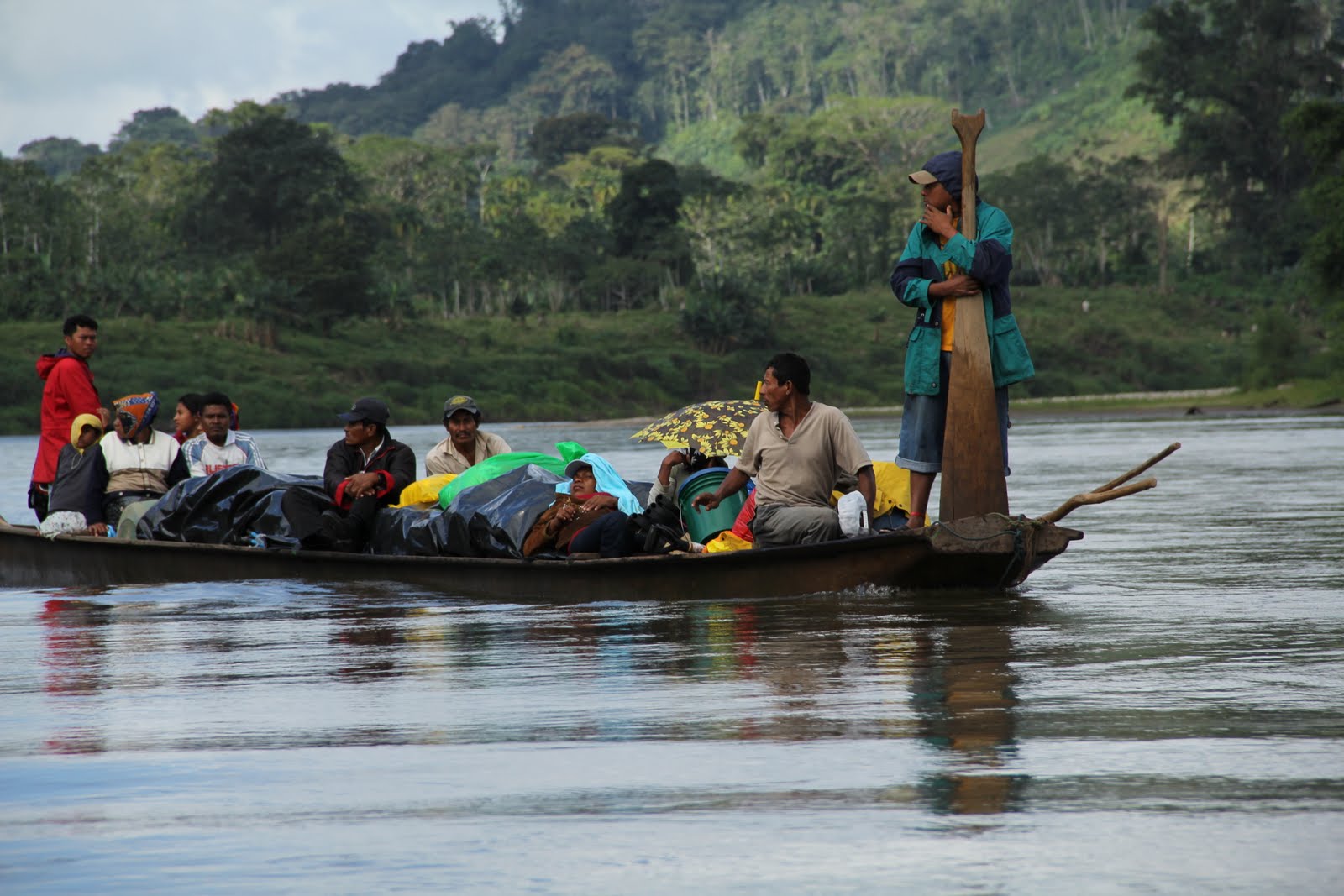


I visited in several communities on the Rio Cocco river this month from the 10th through the 15th. We set up one day medical clinics, taught Bible classes and held worship services each evening. I was given the opportunity to preach one night and we had so many people in the building that one of the brothers told me to hurry up because he was afraid that the building was going to fall down!
I was encouraged to see many of the folks who were baptised during our last trip still attending services and being active in the congregation at San Andres. Every trip on the Rio Cocco is a chance for us to build relationships and share the gospel of Jesus Christ in both word and deed.
It is always exciting but also physically challenging to make these trips as conditions are very primitive in the villages of the river (no electricity, no running water, outhouses, very hot, humid, rain, mud, etc.) but it is always a very rewarding time!
Click the picture below to see all of the photos from this trip. Once you have viewed the first picture in the series you can click on the word "close" in the top right hand corner to view the larger gallery. Feel free to comment with any questions you might have.

Thursday, January 12, 2012
Esperando - Becky
I think it's interesting that, in Spanish, the word for "hoping" is the same word for "waiting." For example, you could say, Están esperando el autobús; They are waiting for the bus. Or, you could say, Estaba esperando de alguna simpatía; I was hoping for some sympathy. In English, the word "waiting" implies expectation, while "hoping" can be more synonymous with "wishing." When we hope for something, usually we have in our heads that it may not happen. However, I think the Spanish connotation fits a little better when it comes to the hope we have from God.
Romans chapter 8 talks about the hope we can have as children of God to receive our spiritual inheritance. Observe the tone of this passage:
19 For the creation waits in eager expectation for the children of God to be revealed... 23 Not only so, but we ourselves, who have the firstfruits of the Spirit, groan inwardly as we wait eagerly for our adoption to sonship, the redemption of our bodies. 24 For in this hope we were saved...
This definitely sounds like the thing we are hoping for is something that we should be expecting to happen. I have heard different Bible teachers talk about things that are "now but not yet," like the fact that our souls are hidden with Christ, but we are still physically here on this earth. I think the same concept is going on here with our adoption as God's children. Verse 16 says, The Spirit himself testifies with our spirit that we are God’s children. Apparently we are already God's children, yet we are still waiting for what we are to receive as heirs. Picking up the passage with the rest of verse 24, we read the obvious:
24 ...But hope that is seen is no hope at all. Who hopes for what they already have? 25 But if we hope for what we do not yet have, we wait for it patiently.
I love what is said further down in the chapter to convince us that our hope is well-founded:
28 And we know that in all things God works for the good of those who love him, who have been called according to his purpose... 31 What, then, shall we say in response to these things? If God is for us, who can be against us? ...35 Who shall separate us from the love of Christ? Shall trouble or hardship or persecution or famine or nakedness or danger or sword? ...37 No, in all these things we are more than conquerors through him who loved us. 38 For I am convinced that neither death nor life, neither angels nor demons, neither the present nor the future, nor any powers, 39 neither height nor depth, nor anything else in all creation, will be able to separate us from the love of God that is in Christ Jesus our Lord.
Woah. That's some pretty powerful stuff, if we really take it to heart. I would sum it up as saying that in every single situation in our lives (us being those who are already in loving relationship with Him), whether in good or bad circumstances, God is right there loving us, so we can hope, really believe that he is working out the best for us. We don't have to wonder if God will love and take care of us; we can already know He will, even though the future hasn't happened yet. I can't talk about this without bringing up Hebrews 11:1, Now faith is being sure of what we hope for and certain of what we do not see.
In my life I have done a lot of waiting. As a teenager, it felt like it was taking forever to find a boyfriend. Once I started dating Tommy, we waited 3 1/2 years to get married while he paid off his debt. From the time we thought we were ready to buy a house, it took us over 2 years to find one. As we were starting to get settled and to think about trying for children, Tommy took a major pay cut at work, enough that I had to start looking for a job and forget about kids for a while. Then, through a number of circumstances, we decided to move to Nicaragua to become missionaries. However, we had to do something with our house first, and it rented just in the nick of time after much agonizing over what we would do if it didn't. Now we are here, but we are still waiting for our "new" (rental) house to be built as we continue to live in the mission. Currently, Tommy is on a trip to a remote location up the Rio Coco, so I'm having to wait a week for him to come home.
What is crazy to me is that I am able to reduce these events, many of which were agonizing at the time, to single sentences. When we were waiting to get married, it was so frustrating to have to drive back and forth all the time to be able to see each other. Now it's hard to remember a lot of that time period. These things are just the major highlights of my life since high school, but I could throw in a ton more "smaller" events. The underlying thing in all of them, though, is that God did work things out for my good. Things I spent so much energy wishing and praying for, He did for me. There were also things that I wanted but that I didn't get, and I can look back now and feel so glad that I didn't get them. This proves to me that God really is looking out for what is best for me.
With this in mind, I shouldn't have any reason to worry about anything. I have witnessed the effects of verse 28 in my life over and over again, so now I hang on to that promise like a security blanket. It is true that I may (and likely will) have to go through a lot of unpleasantness to get to my blessings--and that does produce anxiety in me--but still I know that God is completely faithful. Realizing this has made a huge difference in my life. As I have trusted God with more of my life, He has consistently held up His end of things. I still get nervous and frustrated and impatient at times, but I'm finding less and less reason to hang on to those emotions.
What are you waiting for right now? Do you have hope that God will work it out for your good? Why or why not?
-Becky
Romans chapter 8 talks about the hope we can have as children of God to receive our spiritual inheritance. Observe the tone of this passage:
19 For the creation waits in eager expectation for the children of God to be revealed... 23 Not only so, but we ourselves, who have the firstfruits of the Spirit, groan inwardly as we wait eagerly for our adoption to sonship, the redemption of our bodies. 24 For in this hope we were saved...
This definitely sounds like the thing we are hoping for is something that we should be expecting to happen. I have heard different Bible teachers talk about things that are "now but not yet," like the fact that our souls are hidden with Christ, but we are still physically here on this earth. I think the same concept is going on here with our adoption as God's children. Verse 16 says, The Spirit himself testifies with our spirit that we are God’s children. Apparently we are already God's children, yet we are still waiting for what we are to receive as heirs. Picking up the passage with the rest of verse 24, we read the obvious:
24 ...But hope that is seen is no hope at all. Who hopes for what they already have? 25 But if we hope for what we do not yet have, we wait for it patiently.
I love what is said further down in the chapter to convince us that our hope is well-founded:
28 And we know that in all things God works for the good of those who love him, who have been called according to his purpose... 31 What, then, shall we say in response to these things? If God is for us, who can be against us? ...35 Who shall separate us from the love of Christ? Shall trouble or hardship or persecution or famine or nakedness or danger or sword? ...37 No, in all these things we are more than conquerors through him who loved us. 38 For I am convinced that neither death nor life, neither angels nor demons, neither the present nor the future, nor any powers, 39 neither height nor depth, nor anything else in all creation, will be able to separate us from the love of God that is in Christ Jesus our Lord.
Woah. That's some pretty powerful stuff, if we really take it to heart. I would sum it up as saying that in every single situation in our lives (us being those who are already in loving relationship with Him), whether in good or bad circumstances, God is right there loving us, so we can hope, really believe that he is working out the best for us. We don't have to wonder if God will love and take care of us; we can already know He will, even though the future hasn't happened yet. I can't talk about this without bringing up Hebrews 11:1, Now faith is being sure of what we hope for and certain of what we do not see.
In my life I have done a lot of waiting. As a teenager, it felt like it was taking forever to find a boyfriend. Once I started dating Tommy, we waited 3 1/2 years to get married while he paid off his debt. From the time we thought we were ready to buy a house, it took us over 2 years to find one. As we were starting to get settled and to think about trying for children, Tommy took a major pay cut at work, enough that I had to start looking for a job and forget about kids for a while. Then, through a number of circumstances, we decided to move to Nicaragua to become missionaries. However, we had to do something with our house first, and it rented just in the nick of time after much agonizing over what we would do if it didn't. Now we are here, but we are still waiting for our "new" (rental) house to be built as we continue to live in the mission. Currently, Tommy is on a trip to a remote location up the Rio Coco, so I'm having to wait a week for him to come home.
What is crazy to me is that I am able to reduce these events, many of which were agonizing at the time, to single sentences. When we were waiting to get married, it was so frustrating to have to drive back and forth all the time to be able to see each other. Now it's hard to remember a lot of that time period. These things are just the major highlights of my life since high school, but I could throw in a ton more "smaller" events. The underlying thing in all of them, though, is that God did work things out for my good. Things I spent so much energy wishing and praying for, He did for me. There were also things that I wanted but that I didn't get, and I can look back now and feel so glad that I didn't get them. This proves to me that God really is looking out for what is best for me.
With this in mind, I shouldn't have any reason to worry about anything. I have witnessed the effects of verse 28 in my life over and over again, so now I hang on to that promise like a security blanket. It is true that I may (and likely will) have to go through a lot of unpleasantness to get to my blessings--and that does produce anxiety in me--but still I know that God is completely faithful. Realizing this has made a huge difference in my life. As I have trusted God with more of my life, He has consistently held up His end of things. I still get nervous and frustrated and impatient at times, but I'm finding less and less reason to hang on to those emotions.
What are you waiting for right now? Do you have hope that God will work it out for your good? Why or why not?
-Becky
Thursday, January 5, 2012
Psalms
I have started reading through Psalms to kind of go along with the One-Year daily Bible that some of my friends (some of you) are reading this year. So far I have read as far as Psalm 5. I don't plan to blog every time I read, but I have some thoughts I want to share that I think apply to many of the Psalms.
A common theme in the things that David writes is for God to take vengeance on the wicked, especially those who are against David in particular. To us this may seem rather barbaric, and it may surprise us when David describes how God does take out his vengeance. However--and this may seem harsh too--it occurred to me that God only punishes those who deserve it. The people being destroyed are those who have brought it upon themselves by their actions. These people are against God, not just unsure if they believe in Him, but actively in opposition to Him. They are described as wicked, sinners, mockers, conspirers, plotters, foes, enemies, arrogant, wrong-doers, liars, bloodthirsty, deceitful, filled with destruction, rebels, etc., and this is just what I saw in the first five Psalms. Most of these traits are things that would make these people hated by men too. If we actually knew them, we might feel like it was right for them to be punished. Most people could say, "good riddance" to evil men.
However, there is a problem. The rest of us "good" people have some of these traits too. What one of us hasn't ever lied? Who hasn't plotted in their heart to strike out at someone who hurt them? Is there anyone who has actually followed every single command of those in authority (this includes listening to our parents, following the speed limit, everything)? The thing is, all of us are sinners, and, really, all of us deserve to die. Even the best of us isn't perfect, even David. In light of this, I love verse 7 of Psalm 5:
David doesn't get to come into the house of God because he is somehow worthy. Rather, God takes mercy on him, which indicates that there was some offense that God chose to pardon. Mercy is only necessary when someone has done wrong. But we might say, okay, if David is a sinner too, then why does he get mercy when others get vengeance? Well, one clue is that David is bowing down in reverence. Another is in verse 8:
We can see here that David is actively seeking to be righteous. This doesn't mean that he is always right, but he acknowledges that he needs God to lead him. Instead of plotting against God, which we know from Psalm 2 is a vain endeavor anyway, David, recognizing God's power and authority, is choosing to let God rule him. Let's look at verse 11:
When I read this verse, something that I ask myself is, What do they need protection from? I may be stretching this further than it is intended to go, but I think, honestly, there is only one thing that anyone needs to fear, and that is God. If I am on God's side, I really don't need to fear anything else because He is greater than anything that could hurt me. If I am opposed to God, then I have every reason to be afraid. It follows, then, that I definitely don't want to be on God's bad side. However, since I am imperfect, the only way for me to be right with Him is for Him to lead me and to "make straight [His] way before me." If sin is what causes God's wrath to fall on me, then for me to be "safe," the thing I need protection from is sin.
Yes, there are physical enemies on earth that we need protection from, as well as people who hurt us emotionally. Yes, God is the one to protect us. But, for us to be under God's protection, we need to make sure that we are not the enemy. We are incapable of doing this on our own, so God has to work in us to make us righteous. He will only do that, though, if we let him, so I conclude that the best we can do is to fall helpless before Him, admitting that we can do nothing without Him. Then he will be our refuge.
I encourage you to read all of Psalm 5 again with the idea that we need protection from sin. I think that everyone will be able to relate. I know I did.
-Becky
A common theme in the things that David writes is for God to take vengeance on the wicked, especially those who are against David in particular. To us this may seem rather barbaric, and it may surprise us when David describes how God does take out his vengeance. However--and this may seem harsh too--it occurred to me that God only punishes those who deserve it. The people being destroyed are those who have brought it upon themselves by their actions. These people are against God, not just unsure if they believe in Him, but actively in opposition to Him. They are described as wicked, sinners, mockers, conspirers, plotters, foes, enemies, arrogant, wrong-doers, liars, bloodthirsty, deceitful, filled with destruction, rebels, etc., and this is just what I saw in the first five Psalms. Most of these traits are things that would make these people hated by men too. If we actually knew them, we might feel like it was right for them to be punished. Most people could say, "good riddance" to evil men.
However, there is a problem. The rest of us "good" people have some of these traits too. What one of us hasn't ever lied? Who hasn't plotted in their heart to strike out at someone who hurt them? Is there anyone who has actually followed every single command of those in authority (this includes listening to our parents, following the speed limit, everything)? The thing is, all of us are sinners, and, really, all of us deserve to die. Even the best of us isn't perfect, even David. In light of this, I love verse 7 of Psalm 5:
But I, by your great mercy,
will come into your house;
in reverence will I bow down
toward your holy temple.
David doesn't get to come into the house of God because he is somehow worthy. Rather, God takes mercy on him, which indicates that there was some offense that God chose to pardon. Mercy is only necessary when someone has done wrong. But we might say, okay, if David is a sinner too, then why does he get mercy when others get vengeance? Well, one clue is that David is bowing down in reverence. Another is in verse 8:
Lead me, O Lord, in your righteousness
because of my enemies--
make straight your way before me.
We can see here that David is actively seeking to be righteous. This doesn't mean that he is always right, but he acknowledges that he needs God to lead him. Instead of plotting against God, which we know from Psalm 2 is a vain endeavor anyway, David, recognizing God's power and authority, is choosing to let God rule him. Let's look at verse 11:
But let all who take refuge in you be glad;
let them ever sing for joy.
Spread your protection over them,
that those who love your name may rejoice in you.
When I read this verse, something that I ask myself is, What do they need protection from? I may be stretching this further than it is intended to go, but I think, honestly, there is only one thing that anyone needs to fear, and that is God. If I am on God's side, I really don't need to fear anything else because He is greater than anything that could hurt me. If I am opposed to God, then I have every reason to be afraid. It follows, then, that I definitely don't want to be on God's bad side. However, since I am imperfect, the only way for me to be right with Him is for Him to lead me and to "make straight [His] way before me." If sin is what causes God's wrath to fall on me, then for me to be "safe," the thing I need protection from is sin.
Yes, there are physical enemies on earth that we need protection from, as well as people who hurt us emotionally. Yes, God is the one to protect us. But, for us to be under God's protection, we need to make sure that we are not the enemy. We are incapable of doing this on our own, so God has to work in us to make us righteous. He will only do that, though, if we let him, so I conclude that the best we can do is to fall helpless before Him, admitting that we can do nothing without Him. Then he will be our refuge.
For surely, O Lord, you bless the righteous;
you surround them with your favor
as with a shield (verse 12).
I encourage you to read all of Psalm 5 again with the idea that we need protection from sin. I think that everyone will be able to relate. I know I did.
-Becky
Subscribe to:
Posts (Atom)